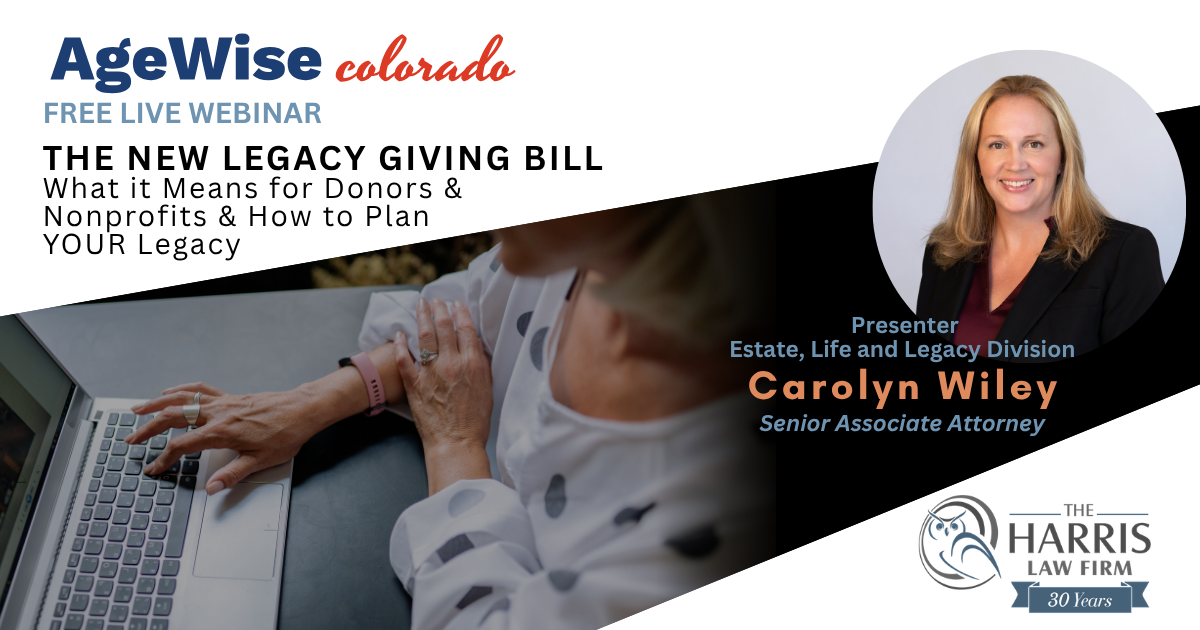
Estate planning is about more than distributing assets; it’s about ensuring your intentions are honored efficiently and without unnecessary obstacles. That’s why Carolyn Wiley is hosting an upcoming webinar to break down Colorado’s new “Legacy Giving to Charitable Organizations” bill, SB 26-118, (https://leg.colorado.gov/bills/SB26-118) and what it means for donors and nonprofits.
In partnership with AgeWise Colorado ( https://agewisecolorado.org/ ), an organization dedicated to connecting seniors and their loved ones with trusted resources so they can successfully age in place in Colorado, this webinar will provide practical insight into how this legislation could impact your estate plan.
Join the Webinar
📅 Tuesday, April 7
🔗 https://us06web.zoom.us/meeting/register/7VfJwqurRDiSvVsxhO6GbQ#/registration
What Is the New Legacy Giving Bill?
The “Legacy Giving to Charitable Organizations” bill introduces important requirements for financial institutions that hold assets designated for charitable organizations. At its core, the bill is designed to streamline and protect the transfer of charitable gifts after a donor’s passing.
Under the bill:
- Financial institutions must pay designated charitable benefits within 60 days after receiving proper documentation, such as an affidavit confirming the donor’s death.
- Institutions cannot impose unnecessary barriers, such as requiring charities to open accounts or provide personal information from staff or board members.
Why This Matters for Estate Planning
This legislation directly impacts how charitable gifts are handled after death, making it a critical consideration when creating or updating your estate plan.
Key implications include:
- Greater certainty for charitable giving: Donors can feel more confident that their intended gifts will be delivered in a timely manner.
- Reduced administrative hurdles: The bill limits burdensome requirements that could delay or complicate distributions.
- Improved accountability: Regulatory oversight helps ensure institutions follow through appropriately.
Important Considerations for Estates
While we often think of our charitable gifts as coming from our Last Will and Testament, charitable gifts are also made from our “non-probate” assets, such as our retirement accounts, because it saves taxes. Sometimes we use payable-on-death designations on bank accounts, securities, or insurance policies. All of these avoid probate. But these gifts can be recaptured when the surviving spouse or children or creditors of the estate do not receive enough money.
While the bill supports efficient charitable giving, it also introduces safeguards to protect families and creditors:
- If a charitable gift is subject to claims (such as creditor claims or elective-share rights), the charity may be required to return funds to the estate.
- Charities must respond to such claims within 60 days or risk accruing statutory interest.
These provisions highlight the importance of aligning your charitable intentions with the broader structure of your estate plan.
Learn What This Means for You
Whether you’re planning your estate, serving as a personal representative, or involved with a charitable organization, understanding this new law is essential. Carolyn Wiley will walk through real-world implications, potential pitfalls, and practical strategies to ensure your plan reflects your goals.
Don’t miss this opportunity to gain clarity on a law that could significantly impact how your legacy is carried out.
👉 Register here: https://us06web.zoom.us/meeting/register/7VfJwqurRDiSvVsxhO6GbQ#/registration
About Carolyn Wiley:
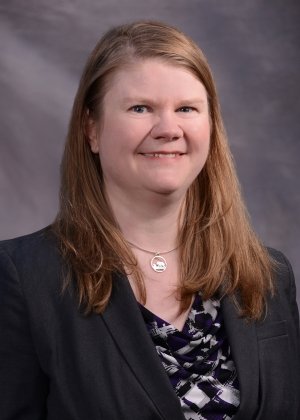
Carolyn Wiley, Senior Associate at The Harris Law Firm, brings nearly two decades of experience helping individuals and families navigate estate planning with clarity and confidence. Recognized as a Colorado Super Lawyers Rising Star, she combines deep legal knowledge with a client-centered approach when protecting both assets and relationships. Whether guiding clients through life transitions or long-term planning, Carolyn is a trusted advocate committed to informed, practical solutions.